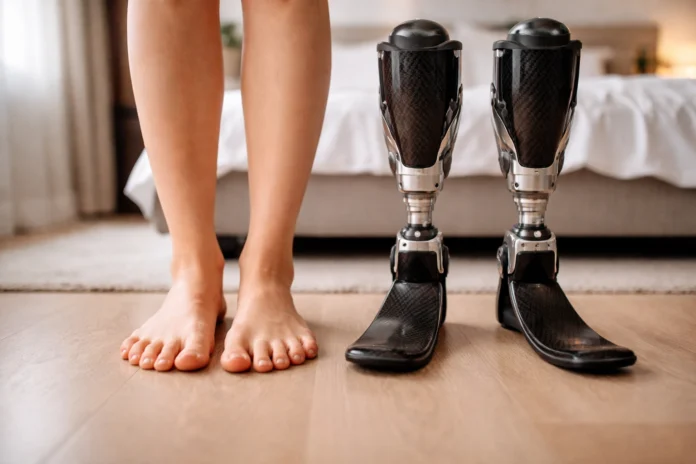
Love and sexuality are often treated as privileges reserved for the young, the able-bodied, and the culturally “ideal.” Disability disrupts that illusion—and exposes how narrow our assumptions really are. The truth is simple and frequently ignored: people with disabilities experience desire, attraction, intimacy, and love as fully and as legitimately as anyone else. What complicates those experiences is not disability itself, but the social barriers built around it.
From an early age, many people with disabilities are desexualized or infantilized. They are spoken about as dependents rather than adults, protected rather than empowered, managed rather than trusted. This erasure has consequences. When society refuses to see someone as a sexual being, it limits their access to education, privacy, healthcare, and healthy relationship models. Desire doesn’t disappear under those conditions—it just goes underground.
Love, for people with disabilities, often requires navigating visibility and invisibility at the same time. Dating can involve difficult disclosures: when to talk about mobility, chronic pain, neurological differences, or support needs. These conversations carry risk, not because disability is shameful, but because rejection is often framed as “practical” rather than prejudiced. Still, many disabled people report that honesty—when met with curiosity instead of fear—builds deeper, more intentional connections.
Sex is another area where myth replaces reality. Disability does not automatically eliminate pleasure, libido, or intimacy. It may change how bodies move, respond, or communicate, but adaptation is not deficiency. Sex is not a single script; it’s a flexible language. Touch, timing, positioning, assistive devices, and communication can all be reshaped to meet real bodies where they are. When partners approach intimacy as collaboration rather than performance, disability becomes one factor among many—not a barrier to fulfillment.
Healthcare plays a critical role here, and too often fails. Sexual health education for people with disabilities is frequently inadequate or nonexistent. Doctors may avoid the topic entirely, assuming disinterest or incapacity. This silence leaves people without information about consent, contraception, pleasure, fertility, or sexually transmitted infections. Sexual agency requires knowledge, and denying that knowledge is a quiet form of control.
Autonomy and consent are especially important in conversations about disability and intimacy. Some individuals rely on caregivers for daily needs, which can blur boundaries if not handled with clarity and respect. Adults with disabilities are still adults. They are entitled to privacy, sexual expression, and relationships on their own terms. Support systems should enable independence, not override it.
Romantic partnerships that include disability often challenge cultural ideas about equality. Equality does not mean identical ability or contribution; it means mutual respect, choice, and voice. One partner may provide physical support while the other offers emotional grounding, humor, stability, or care in different forms. Healthy relationships are not measured by symmetry, but by consent and reciprocity.
Perhaps the most radical shift comes when society stops asking whether people with disabilities can have love and sex, and starts asking why we ever doubted it. Disability is part of the human spectrum, not an exception to it. Desire does not require perfection. Intimacy does not demand conformity. Love does not ask for able-bodied permission.
When people with disabilities are allowed to define their own bodies, relationships, and pleasures, something broader happens: everyone gains a more honest, expansive understanding of what it means to be human.